
Last updated September 10, 2026
Full 25-point door and opener safety check with every visit - springs, cables, rollers, tracks, and your LiftMaster or Chamberlain opener included
You get a price before we start. It does not change when the truck arrives.
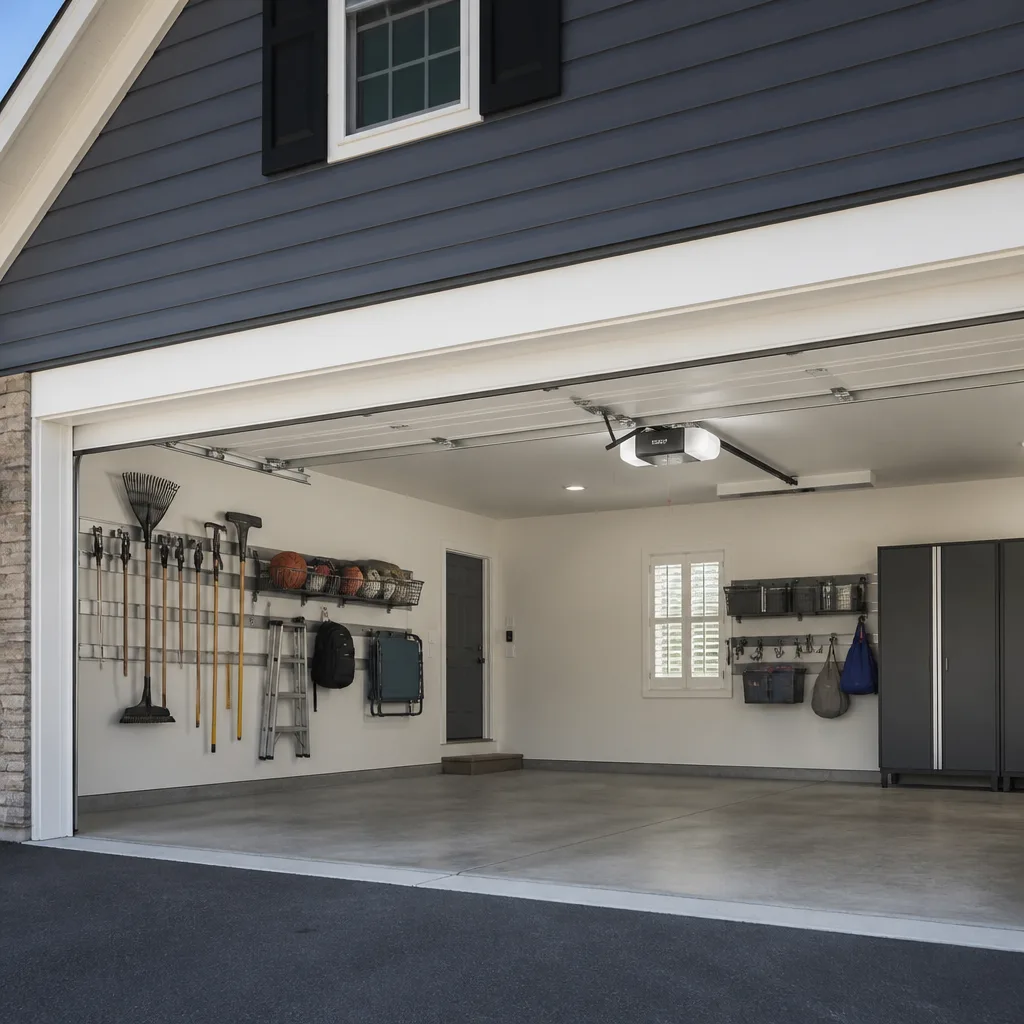
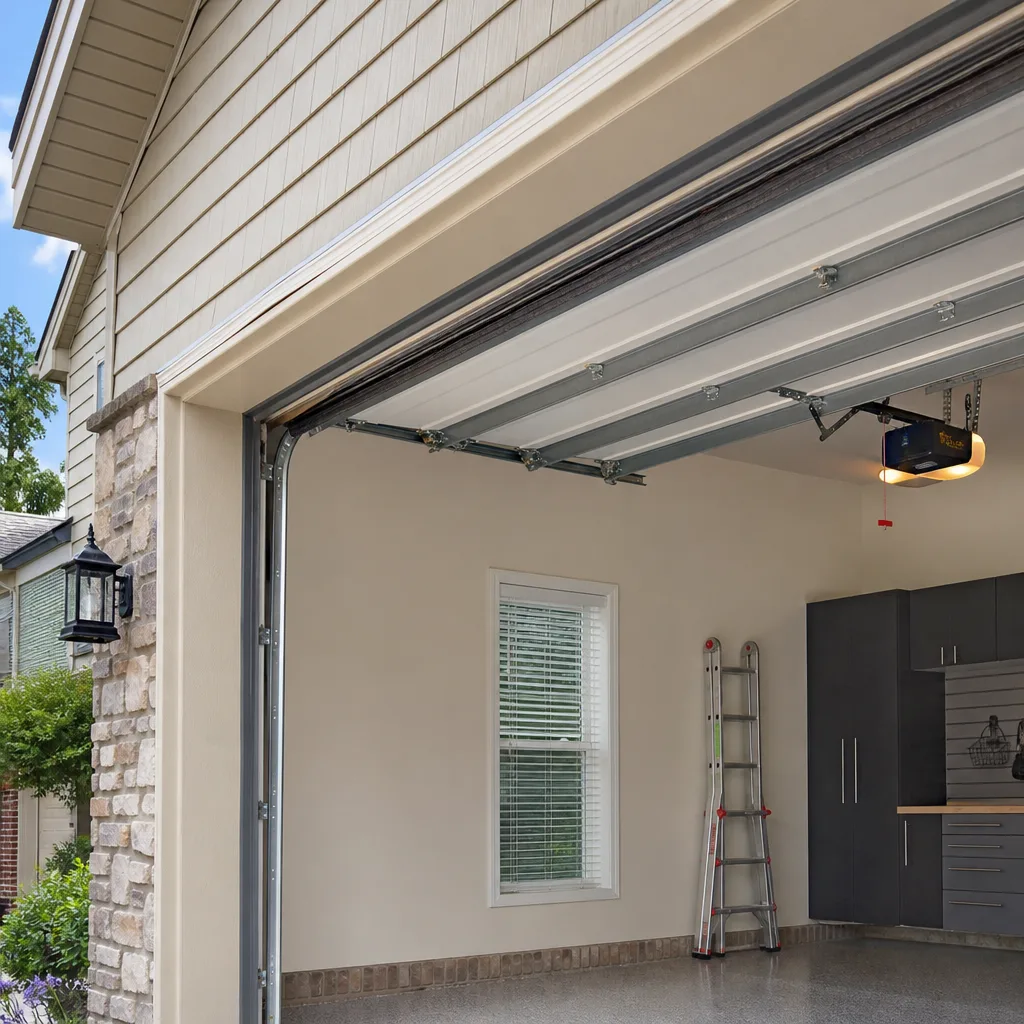
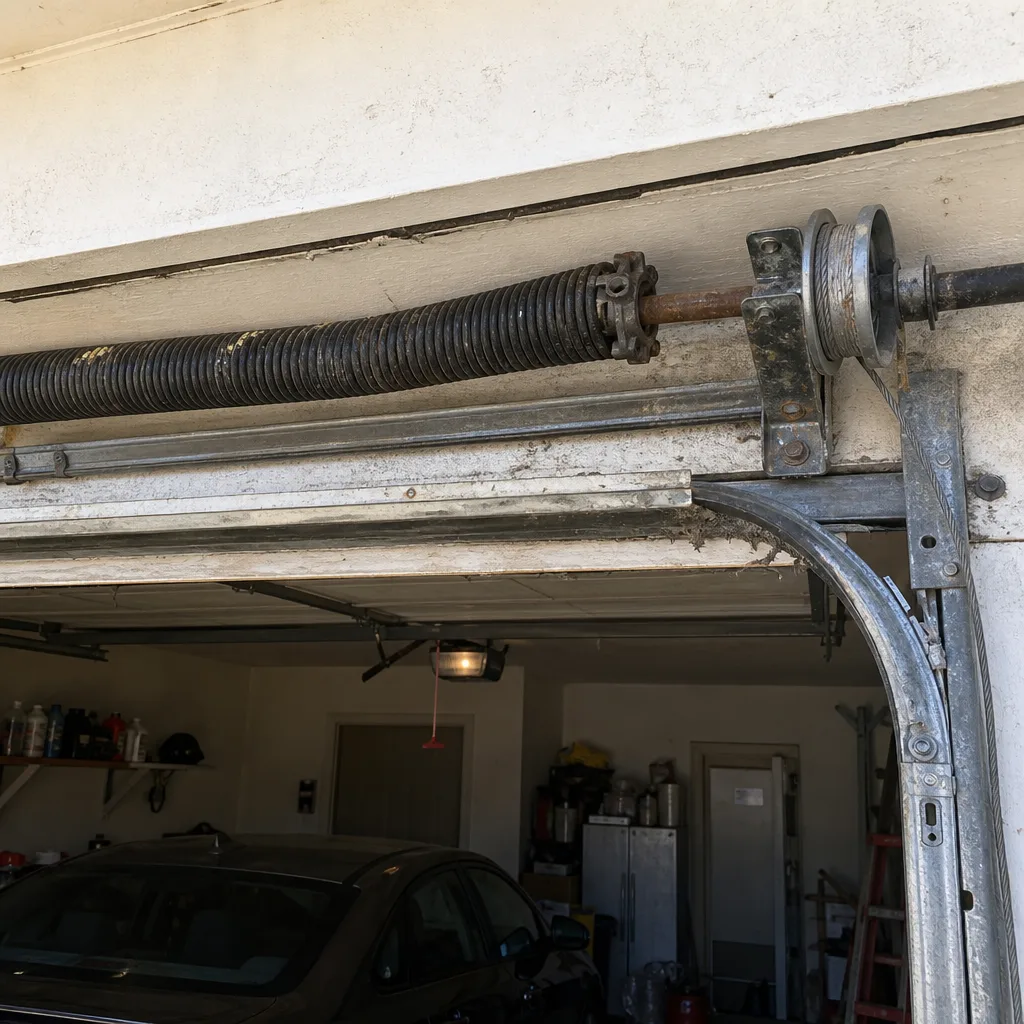 Before
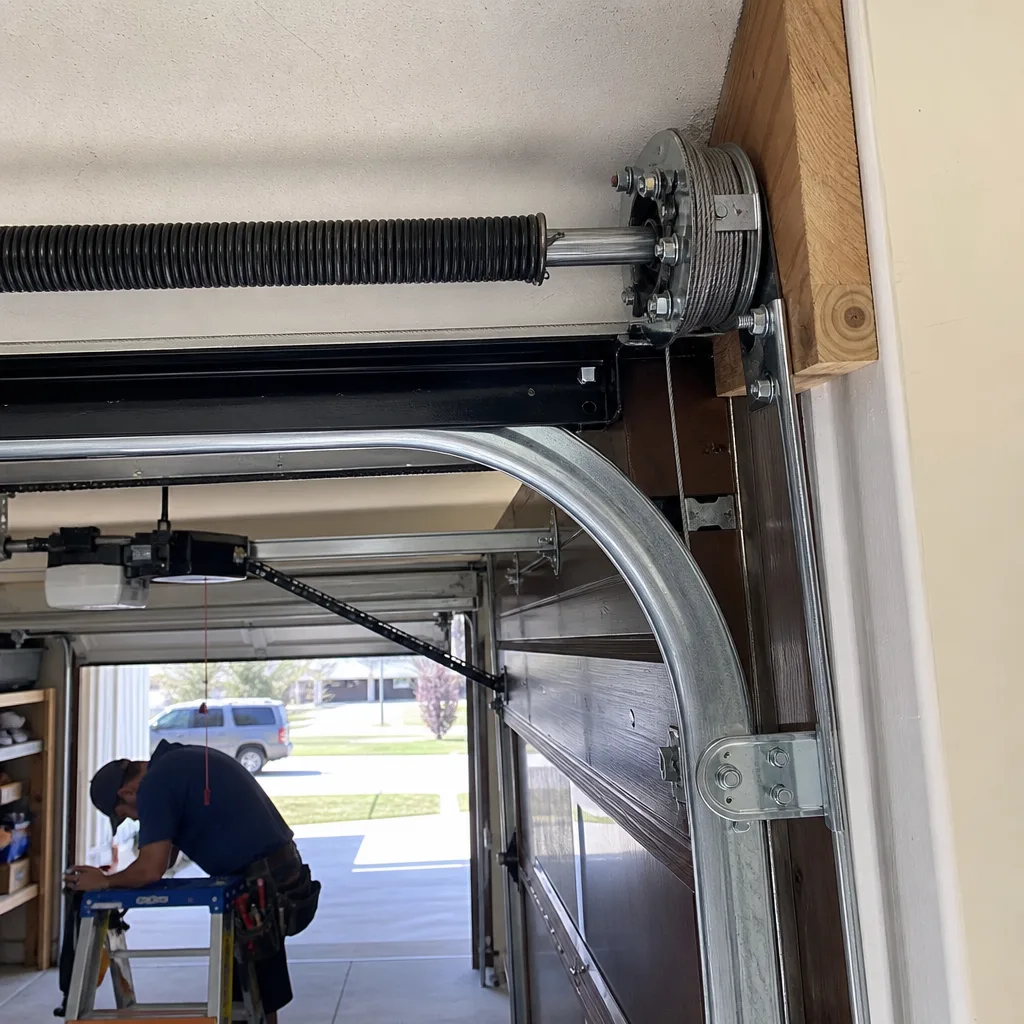 After
After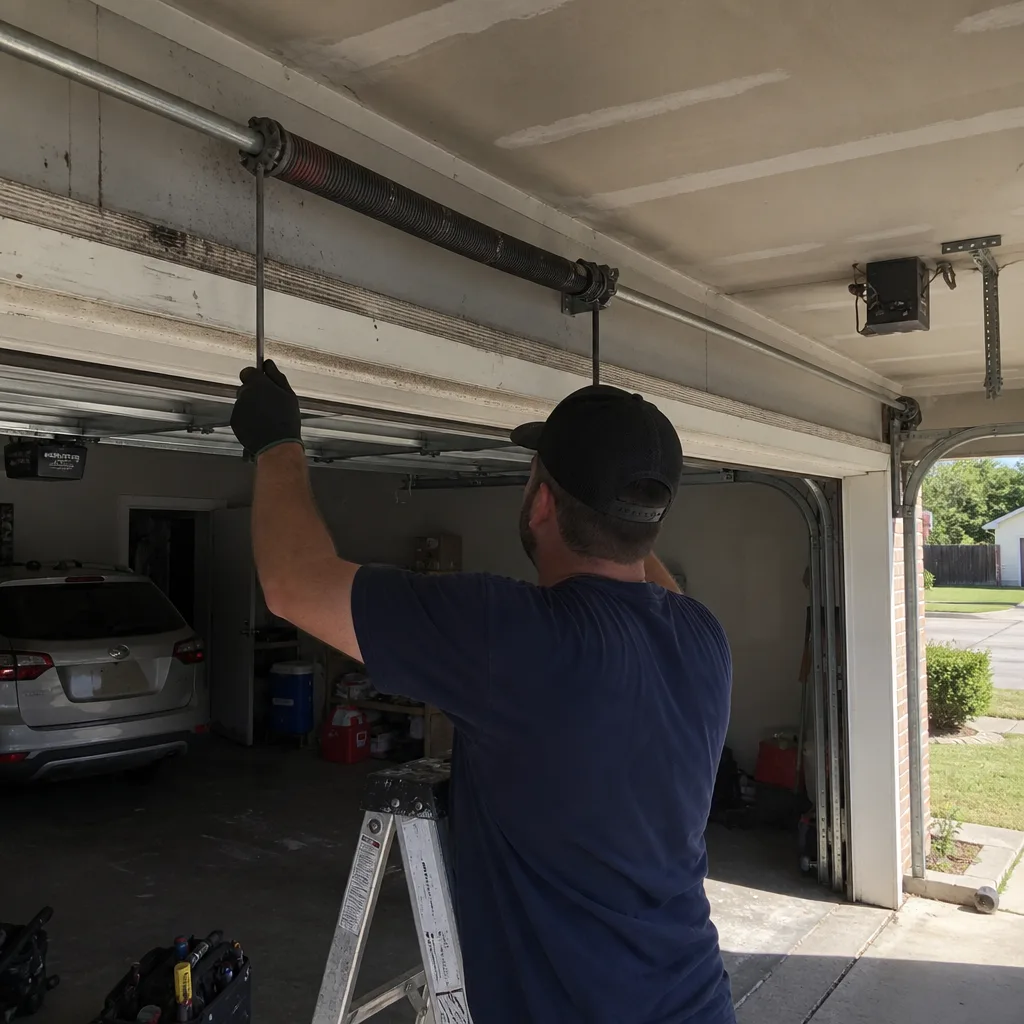 Before
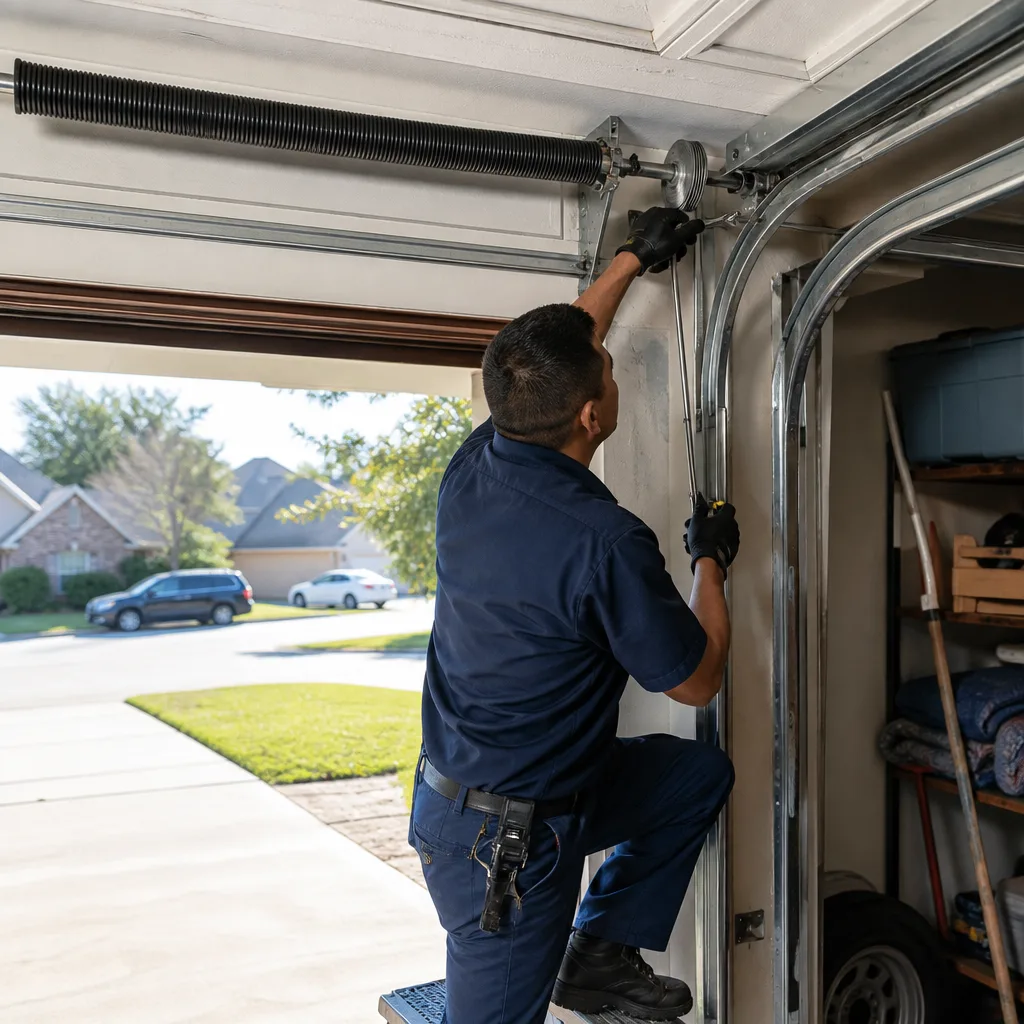 After
After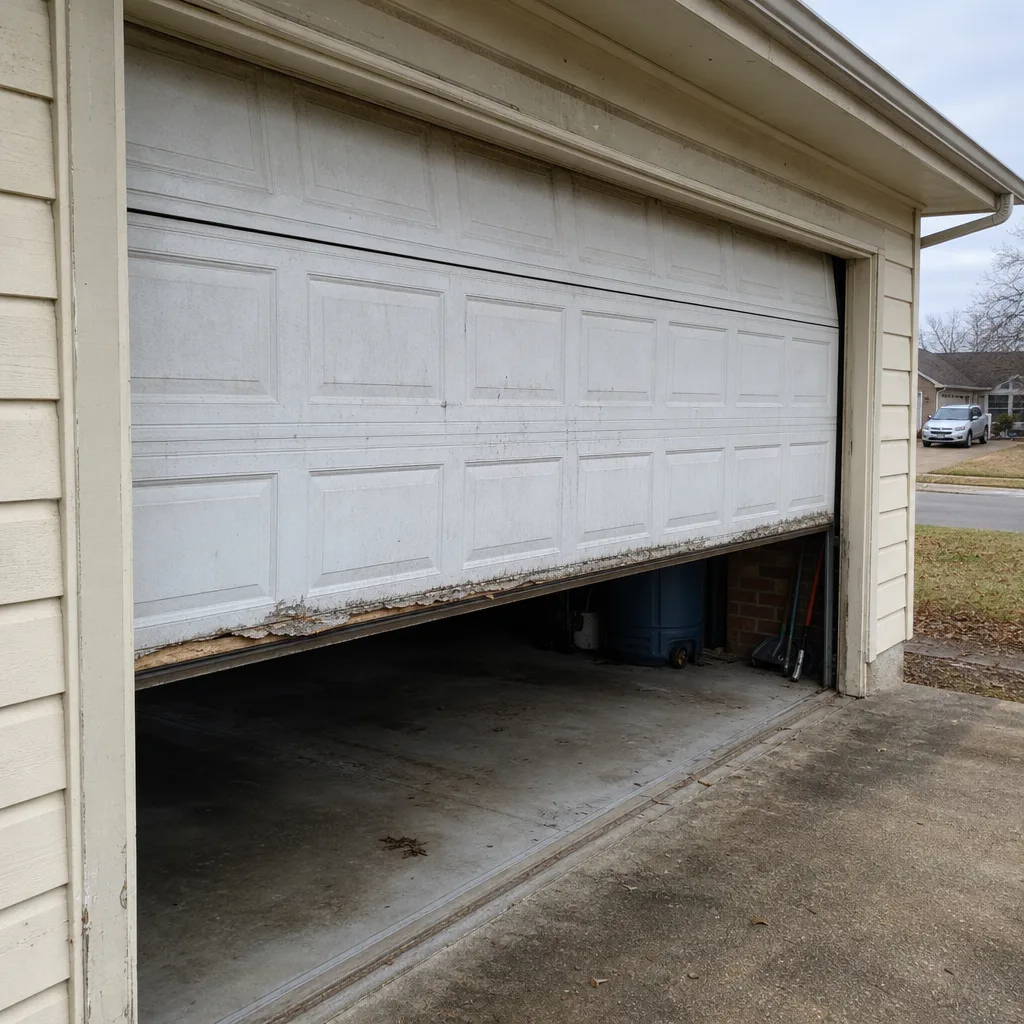 Before
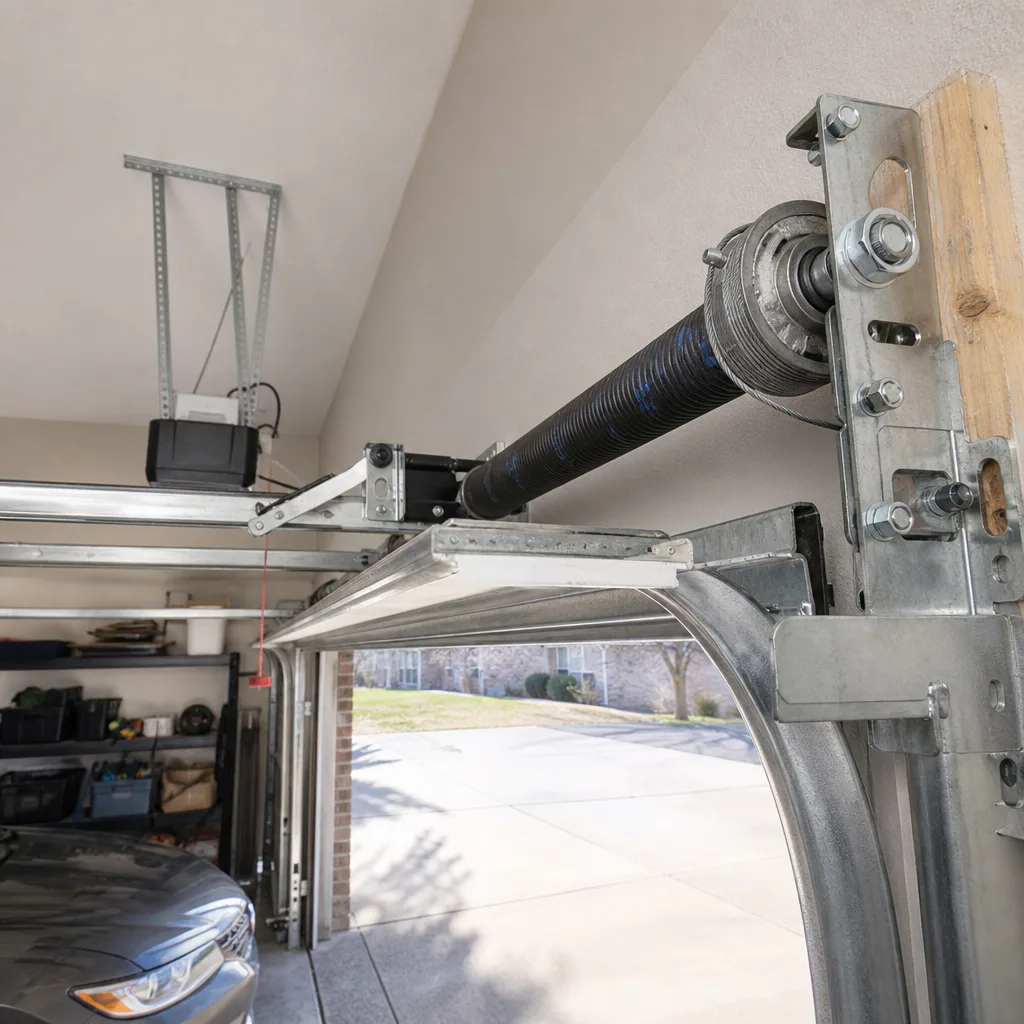 After
AfterDIY vs Professional Garage Door: The Benbrook Homeowner’s Decision Guide
Garage door springs store enough energy to break a wrist. That’s not a scare tactic - it’s a physics fact that defines exactly where the DIY line sits, and everything on the homeowner’s side of that line is genuinely straightforward. After 42 years in this trade, we’ve learned that most Benbrook homeowners don’t want to tinker for the thrill of it. They want to know which problems they can solve with a Saturday morning and a little patience, and which ones will cost more after a DIY attempt than if they’d called a professional first. This guide draws that line in plain terms.
Quick Answer
Most Benbrook homeowners can safely handle lubrication, sensor alignment, weather seal replacement, and remote reprogramming themselves. Any work involving torsion springs, cable replacement, or door rebalancing should be left to a trained technician. The risk isn’t about skill - it’s about controlled release of stored mechanical energy that can cause serious injury regardless of how careful you are.
Table of Contents
- Where the DIY Line Sits
- Tasks Any Homeowner Can Handle
- Why Springs Are Different: The Physics of Torsion Energy
- The True Cost of Doing It Yourself
- What You Can Diagnose Before Calling
- Benbrook-Specific Risks: Heavy Doors and Hard Water
- Tools Worth Owning vs. Tools to Skip
- When Professional Work Pays for Itself
Where the DIY Line Sits
The garage door industry has done homeowners no favors by blurring this distinction. Every big-box store sells spring replacement kits with confident packaging. Online videos make the work look methodical and safe. What they don’t show is the moment a winding bar slips and a 200-pound door drops, or a spring fragment exits the cone at speed.
We’ve replaced doors in Benbrook’s Ridglea Hills neighborhood where a homeowner’s DIY spring attempt bent the top section beyond repair. In Westpark, we found a cable that had been routed incorrectly around the drum, wearing a groove into the track. These weren’t careless people. They were competent homeowners who crossed a line they didn’t know existed.
Here’s the framework we use:
- Homeowner side: Anything that doesn’t require releasing or adjusting tension on the spring system. Lubrication, visual inspection, sensor cleaning and alignment, weather seal replacement, remote programming, cosmetic panel repair.
- Professional side: Spring replacement, cable replacement, drum adjustment, door rebalancing, opener mounting bracket work, track realignment after impact damage.
The line isn’t about intelligence or mechanical aptitude. A retired engineer in Benbrook’s Bellaire neighborhood has more technical knowledge than any of our technicians. The line is about risk asymmetry. When a mistake costs a finger or an eye, the task belongs in professional hands regardless of who is attempting it.
Our Garage Door Repair in Benbrook team sees the aftermath of DIY attempts several times each month. We don’t judge the homeowner. We fix the problem and explain where the line sits for next time. That’s the square deal.
Tasks Any Homeowner Can Handle
These four tasks require no special tools beyond what most Benbrook homeowners already own, and none involve the spring system. Done regularly, they prevent the majority of service calls we receive.
1. Lubrication
Benbrook’s climate swings from humid summers to dry winters. That variation causes metal components to expand, contract, and bind. A homeowner with a can of white lithium grease and a rag can maintain smooth operation indefinitely.
- Close the door and disconnect the opener by pulling the red release handle.
- Apply a thin line of grease to each hinge pivot point, the roller stems where they enter the hinges, and the bearing plates at each end of the spring shaft. Do not grease the track itself - rollers need friction to roll rather than slide.
- Wipe excess with a rag. Run the door manually through two full cycles to distribute.
- Reconnect the opener.
We recommend this twice yearly: once when the mesquite trees start leafing out in March, and again when the first cold front drops temperatures below 50 in October. That rhythm matches Benbrook’s seasonal shift and keeps the door quiet through temperature extremes.
2. Sensor Alignment and Cleaning
Photo-eye sensors sit four to six inches off the ground on either side of the door. When they misalign or collect dust, the door reverses immediately or refuses to close.
- Check that both sensor LEDs are lit - typically solid green on one, solid red or amber on the other.
- If one is dark or blinking, loosen its wing nut, adjust until both LEDs are steady, and retighten.
- Clean the lenses with a dry cloth. Spider webs across the beam path are common in Benbrook’s wooded lots near the Trinity River corridor.
- Verify alignment by closing the door and waving a broom handle through the beam - it should reverse within two seconds.
3. Weather Seal Replacement
The rubber strip across the bottom of the door hardens and cracks after years of UV exposure. In Benbrook, where afternoon sun hits west-facing garage doors hard through summer, this happens faster than homeowners expect.
Measure the door width, buy a replacement seal in T-style or bulb-style to match the existing channel, and slide it in from one end. A little dish soap helps. No tools required beyond scissors to trim the excess.
4. Remote and Keypad Reprogramming
After power outages or when a remote loses sync, reprogramming is straightforward. For most LiftMaster and Chamberlain units common in Benbrook homes, press the learn button on the opener motor, then press the remote button within 30 seconds. The LED will blink to confirm. Keypads follow the same pattern with a PIN entry sequence detailed in the owner’s manual.
These tasks save money, extend equipment life, and give homeowners genuine control over their garage door’s basic maintenance, as detailed in our Garage Door Repair Maintenance Checklist for Benbrook Homeowners. They also build familiarity with how the system should look and sound when healthy - knowledge that helps with the diagnostic steps we’ll cover later.
Why Springs Are Different: The Physics of Torsion Energy
A standard residential garage door weighs between 150 and 250 pounds. The springs exist to make that weight manageable. When the door is closed, the springs are fully wound and storing maximum energy. When the door opens, that energy releases gradually through the cable and drum system, offsetting the door’s weight so a one-horsepower opener or a human arm can lift it.
The energy stored in a wound torsion spring is substantial. A typical 2-inch diameter spring with 0.225 wire and 32 active coils, wound to 7.5 turns, stores roughly 1,200 inch-pounds of torque. Released suddenly through a slipped winding bar or failed cone, that energy can accelerate a steel bar to lethal speed or drop the full door weight in under a second.
This isn’t theoretical. We’ve seen springs snap during attempted DIY replacement in Benbrook’s Oakmont neighborhood, embedding fragments in the drywall ceiling. We’ve treated technicians who caught a winding bar across the palm when a set screw failed. These are trained professionals wearing safety glasses and using proper bars. The risk to a homeowner with a screwdriver and a YouTube tutorial is not comparable - it’s significantly higher.
The professional approach uses specific tools: hardened steel winding bars that fit the cone holes precisely, not adjustable wrenches or screwdrivers that can slip; vice grips to secure the shaft; and a methodical unwinding procedure that releases energy in controlled increments. Even with these tools, the work requires physical positioning that puts hands and face near the spring assembly throughout.
Some homeowners reason that extension springs - the older stretched-spring system still found in some pre-1990 Benbrook homes - are safer because they don’t require winding. This is incorrect. Extension springs store energy differently but in comparable amounts, and their containment cables are often missing or degraded in older installations. A failed extension spring can whip across the garage with enough force to fracture bone.
We carry springs for all major brands - Clopay, Amarr, Wayne Dalton, Raynor, and others - on every truck because we complete most spring replacements in a single visit. The right spring, correctly sized to the door weight and drum geometry, installed with proper winding tension and safety cable containment. That’s the standard that protects the homeowner and the property.
The True Cost of Doing It Yourself
The retail price of a torsion spring at a Benbrook home improvement store runs $40 to $80. A professional spring replacement from Mainspring Garage Door Co. home typically ranges from $180 to $340 depending on door size, spring type, and whether cables or other hardware need replacement. The gap tempts homeowners to DIY. But the comparison is incomplete.
Parts markup and quality differential: Retail springs are often imported with shorter cycle ratings - 5,000 to 7,500 open/close cycles versus 10,000 to 15,000 for trade-grade springs we install. At four cycles daily, that’s a 3.5-year spring versus a 7- to 10-year spring. The retail spring costs less upfront and more over time.
Tool rental or purchase: Proper winding bars, vice grips, and a winding bar set run $80 to $150. Most homeowners use these once, if at all. Improvised tools risk injury and damage.
The failure scenario: When a DIY spring replacement goes wrong, the typical costs we encounter include: bent top door section ($200-$400), damaged opener carriage or rail ($150-$350), stripped drum or shaft ($100-$200), and the original spring replacement still needed. One failed DIY attempt in Benbrook’s Chapin neighborhood last year cost the homeowner $680 to correct - more than double the professional price from the start.
Time value: A professional spring replacement takes 45 to 90 minutes. A first-time DIY attempt typically consumes four to six hours, often spread across multiple weekends as the homeowner waits for additional parts or recovers from a setback.
The honest calculation: DIY spring work saves money only if everything goes right the first time, with no injury, no equipment damage, and no subsequent premature failure from incorrect sizing or tension. We’ve been doing this since 1984. That combination of outcomes is rare enough that we don’t recommend betting on it.
What You Can Diagnose Before Calling
The most expensive portion of many service calls isn’t the repair - it’s the diagnostic time. A homeowner who can accurately describe what the system is doing, and rule out simple causes, often receives a faster repair and a lower bill. Here’s what to check and document.
Listen and Observe
Run the door through a complete cycle and note:
- Does the opener motor run while the door doesn’t move? (Likely stripped gear or broken carriage - opener issue, not door mechanism.)
- Does the door start to lift then stop or reverse? (Spring failure, door binding in track, or force setting too sensitive.)
- Does one side lift before the other? (Broken cable, seized roller, or door off-track.)
- Is there a loud bang from the garage, after which the door feels heavy? (Spring failure, almost certainly.)
- Does the door close fully then immediately reopen? (Sensor misalignment or obstruction.)
Check the Basics
- Verify the opener is plugged in and the breaker hasn’t tripped. Benbrook’s summer storms cause brief outages that can leave GFCI outlets tripped.
- Test the wall button - if it works but remotes don’t, the issue is signal-related, not mechanical.
- Inspect the trolley - the piece that connects the opener arm to the door. If it’s disconnected, re-engage it per the manufacturer’s procedure.
- Look for obvious track damage: dents, gaps at mounting brackets, or rollers that have jumped the track.
When you call with this information, our technician arrives with appropriate parts and a clearer picture of the required work. In our experience, homeowners who perform this diagnostic step before calling reduce their average repair time by 20 to 30 minutes. That’s real money saved, and it doesn’t require touching the spring system.
Our Garage Door Opener in Benbrook service page details common opener-specific symptoms for homeowners who suspect the motor unit rather than the door itself.
Benbrook-Specific Risks: Heavy Doors and Hard Water
Garage door risk isn’t uniform across climates and construction styles. Benbrook presents two factors that raise the stakes for DIY work beyond what a generic guide would suggest.
Heavy steel doors in older homes: Many Benbrook neighborhoods built between 1960 and 1990 - Ridglea, Westpark, Oakmont, and areas near Benbrook Lake - were constructed with solid-steel panel doors that weigh significantly more than modern insulated steel or aluminum models. A 16-foot wide, non-insulated steel door from this era can approach 300 pounds. The springs required to balance that load are correspondingly larger, with higher wire diameter and more stored energy. The same DIY tutorial written for a modern 180-pound door becomes dangerous when applied to these heavier installations.
We’ve found homeowners in these neighborhoods often don’t know their door’s weight. They assume all residential doors are similar. They’re not, and the difference matters for both spring sizing and safety margins.
Hard water mineral buildup: Benbrook draws from multiple water sources with mineral content that leaves scale deposits on exposed metal. Garage door springs, particularly in homes near the Trinity River corridor with higher humidity, develop surface corrosion that isn’t immediately visible. The spring appears intact but has stress risers at corrosion pits. When a homeowner attempts to adjust or replace a spring with this hidden degradation, failure probability rises substantially.
Our technicians inspect for this condition during every spring service. We replace springs showing significant pitting even if they haven’t yet failed, because we know the failure mode is accelerated in this water chemistry. A DIY replacement of a visibly intact but internally compromised spring simply resets the timer on a more dangerous failure.
For homeowners in these older Benbrook neighborhoods, we recommend professional inspection every two years rather than the standard three-to-five year interval. The $89 Seasonal Tune-Up we offer includes spring condition assessment, and the senior and veteran 5% discount applies permanently.
Tools Worth Owning vs. Tools to Skip
A modest tool investment supports legitimate DIY maintenance. Beyond that, specialty tools for professional-grade repair rarely justify their cost for one-time use.
Worth owning:
- White lithium grease in a spray can with straw applicator
- Silicone spray for weather seal conditioning
- Adjustable wrench set for track bolt adjustment
- Level for sensor alignment verification
- Step ladder rated for your weight plus tools
Not worth owning for DIY use:
- Torsion spring winding bars - specific diameter and length for each spring type, useless for any other purpose
- Cable pullers and come-alongs - required for safe cable replacement on heavy doors
- Spring winding cones and specialty hardware - single-use, easy to order wrong
- Shaft collars and bearing plate pullers - professional tools with professional risk profiles
The dividing principle: if a tool exists solely to manage stored mechanical energy safely, its presence in a homeowner’s garage signals a task that shouldn’t be performed there. Professional technicians carry these tools because the tasks require them. Homeowners shouldn’t perform the tasks, so they shouldn’t need the tools.
When Professional Work Pays for Itself
Some garage door work isn’t dangerous but is still poor economy for DIY. Installation of new doors and openers falls in this category. The measurements must be precise to quarter-inch tolerances. The spring system must be matched to actual door weight, not nominal specifications. Warranty coverage from manufacturers like LiftMaster, Chamberlain, and Genie requires professional installation for full terms, as covered in our overview of Garage Door Permits, Codes & Inspections in TX: What You Need to Know.
Our Garage Door Installation in Benbrook service includes on-site measurement, load calculation, and factory-authorized installation that preserves warranty protection. A homeowner who measures incorrectly and orders a door that doesn’t fit - or who installs an opener on an improperly balanced door, burning out the motor in eighteen months - has saved nothing.
The same logic applies to panel replacement after vehicle impact. Modern door sections are not interchangeable across brands or even model years. A Benbrook homeowner who orders a “similar looking” Clopay panel online often finds the hinge locations, track geometry, or insulation profile don’t match. The panel sits in the garage while we source and install the correct one, and the original purchase becomes unreturnable custom goods.
Professional work pays for itself when:
- The task requires factory-authorized installation for warranty validity
- Measurement precision affects safety or function
- Parts compatibility is non-obvious and non-returnable
- Mistakes cascade into larger problems (improper spring tension wears opener, unbalanced door damages track)
- The homeowner’s time has value that exceeds the labor premium
Our 90-Day Done Right Promise covers every completed job. If it’s not right, we come back. No paperwork, no arguing, in writing on every invoice. That’s been our standard since Carl Dutton founded this company, and it’s why homeowners who’ve been burned by contractors before trust us with their second call.
Common Mistakes to Avoid
- Using screwdrivers as winding bars. A screwdriver shaft is not hardened steel, not the correct diameter, and not designed to withstand torsional load. We’ve seen them bend and release suddenly, with predictable results. Proper winding bars cost $15 and last indefinitely.
- Replacing only one spring on a two-spring system. Springs age in pairs. The unworn spring has more cycles remaining than the new one, creating imbalance that wears the opener and door hardware unevenly. In Benbrook’s hot summers, this imbalance accelerates track wear on the heavier side.
- Ignoring cable condition when replacing springs. Frayed or corroded cables fail soon after new springs are installed, because the fresh springs apply force the degraded cables can’t handle. We replace cables with every spring service as standard practice.
- Adjusting opener force settings to compensate for a heavy door. This masks the underlying problem - typically spring failure or door binding - while stressing the opener motor and creating a crushing hazard if the safety reverse fails. The correct fix is door mechanism repair, not force setting workaround.
- Installing a new opener on an unbalanced door. The opener isn’t designed to lift the full door weight. It assists a properly balanced door. An unbalanced door burns out the motor, strips the drive gear, and creates erratic operation that homeowners misdiagnose as opener failure.
- Neglecting safety cable containment on extension spring systems. Older Benbrook homes with extension springs often lack these cables, or have cables that have corroded through. The containment cable prevents the spring from whipping when it fails. It’s a $20 part that prevents a $2,000 injury.
- Assuming all garage doors and openers are compatible. A Genie screw-drive opener from 2005 won’t necessarily interface with a modern smart-home door, and a Raynor door’s proprietary hinge spacing may not accept standard replacement panels. Compatibility verification before purchase prevents expensive mismatches.
When to Call a Professional
Call a technician when the task involves spring tension, cable replacement, door rebalancing, track realignment after impact, or opener installation on a new door. Call when the door has made a loud noise and now operates differently. Call when you’re unsure whether a problem is mechanical or electrical, or when you’ve performed basic diagnostics and the issue persists.
Call sooner rather than later if the door is stuck open - a security and weather exposure issue that compounds with time. In Benbrook, where afternoon thunderstorms can arrive with little warning, an open garage invites water damage to stored items and the door’s own electronics.
Mainspring Garage Door Co. offers free estimates in Benbrook. A technician arrives, assesses the system, and states the flat price before any work begins. You’ll know exactly what the repair costs and what it includes. Call (817) 662-2212 to schedule, or if you need guidance on whether your situation requires professional service. Our phones are answered by a live person, 24 hours a day, including nights, weekends, and holidays. No phone trees, no voicemail, no after-hours answering service.
Frequently Asked Questions
Torsion spring replacement in Benbrook typically runs $180 to $340 for a standard residential door, including parts, labor, and warranty. Extension spring systems range slightly lower, $150 to $280. The exact price depends on door size, spring type, and whether cables or additional hardware need replacement. We state the flat price before any work begins, and our $50 Off Any Repair Over $250 offer applies automatically. Call (817) 662-2212 for an exact quote - estimates are free.
You can purchase a spring and attempt replacement, but we do not recommend it. The stored energy in a wound torsion spring can cause serious injury if released uncontrolled. Proper replacement requires specific winding bars, knowledge of door weight calculation, and physical positioning that places hands and face near the spring assembly. We’ve treated injuries from competent homeowners who understood the risk and still had a tool slip. The savings over professional service are typically $100 to $200 - insufficient to justify the injury risk and the potential for cascading damage if sizing or tension is incorrect.
A door that feels heavier has lost spring assistance. Springs weaken gradually through cycle fatigue, or fail suddenly through fracture. In Benbrook, hard water mineral deposits accelerate surface corrosion on springs, particularly in homes near the Trinity River corridor with higher ambient humidity. The door isn’t actually heavier - the springs are providing less counterbalance. This condition stresses the opener motor and creates a crushing hazard if the opener fails or the emergency release is used. Have the spring system assessed by a professional.
No. Our flat price is stated before any work begins, based on the repair type and door configuration. If we discover additional issues during service - a frayed cable that should be replaced with the spring, for example - we explain the finding, quote the additional work separately, and obtain your approval before proceeding. There are no surprises on the bill. This is the no-hassle upfront pricing we’ve operated under since 1984.
Yes. Our technicians arrive with springs, cables, rollers, hinges, and openers from all major brands including LiftMaster, Chamberlain, Genie, Clopay, Amarr, Wayne Dalton, Craftsman, and Raynor. Most repairs are completed in a single visit. For the minority requiring special-order parts - typically custom door sections or discontinued opener models - we schedule return service promptly and secure the door safely in the interim.
For most Benbrook homes, every three to five years is adequate for a professional inspection and tune-up. Homes with heavier steel doors from the 1960s to 1990s, or properties in areas with harder water and higher humidity near the Trinity River, benefit from every-two-year inspection. Our $89 Seasonal Tune-Up includes spring condition assessment, hardware tightening, lubrication, safety reverse testing, and sensor alignment verification. The permanent 5% senior and veteran discount applies.
The Bottom Line
The DIY-professional line for garage doors is drawn by physics, not opinion. Lubrication, sensor alignment, weather seal replacement, and remote programming are legitimate homeowner maintenance that saves money and prevents problems. Spring work, cable replacement, door rebalancing, and new installation belong with trained technicians who have the tools, parts, and experience to complete them safely and correctly.
In Benbrook specifically, the combination of heavy legacy doors and mineral-rich water chemistry raises the stakes for DIY attempts beyond what generic advice would suggest. Know your door’s age and construction. Perform the diagnostic steps that reduce professional service time. And when the task crosses the line into stored-energy risk, call someone who handles that risk daily.
We’ve been serving this area since 1984. Our trucks carry the parts. Our technicians are background-checked, uniformed, and trained under our K.E.Y.S. values code: Krafted right, Every time, Your home first, Standing behind it. The price is flat, stated upfront, and backed by our 90-Day Done Right Promise in writing on every job. That’s the square deal.
Written by Carl Dutton, Owner at Mainspring Garage Door Co., serving Benbrook since 2016.