
Last updated September 10, 2026
Full 25-point door and opener safety check with every visit - springs, cables, rollers, tracks, and your LiftMaster or Chamberlain opener included
You get a price before we start. It does not change when the truck arrives.
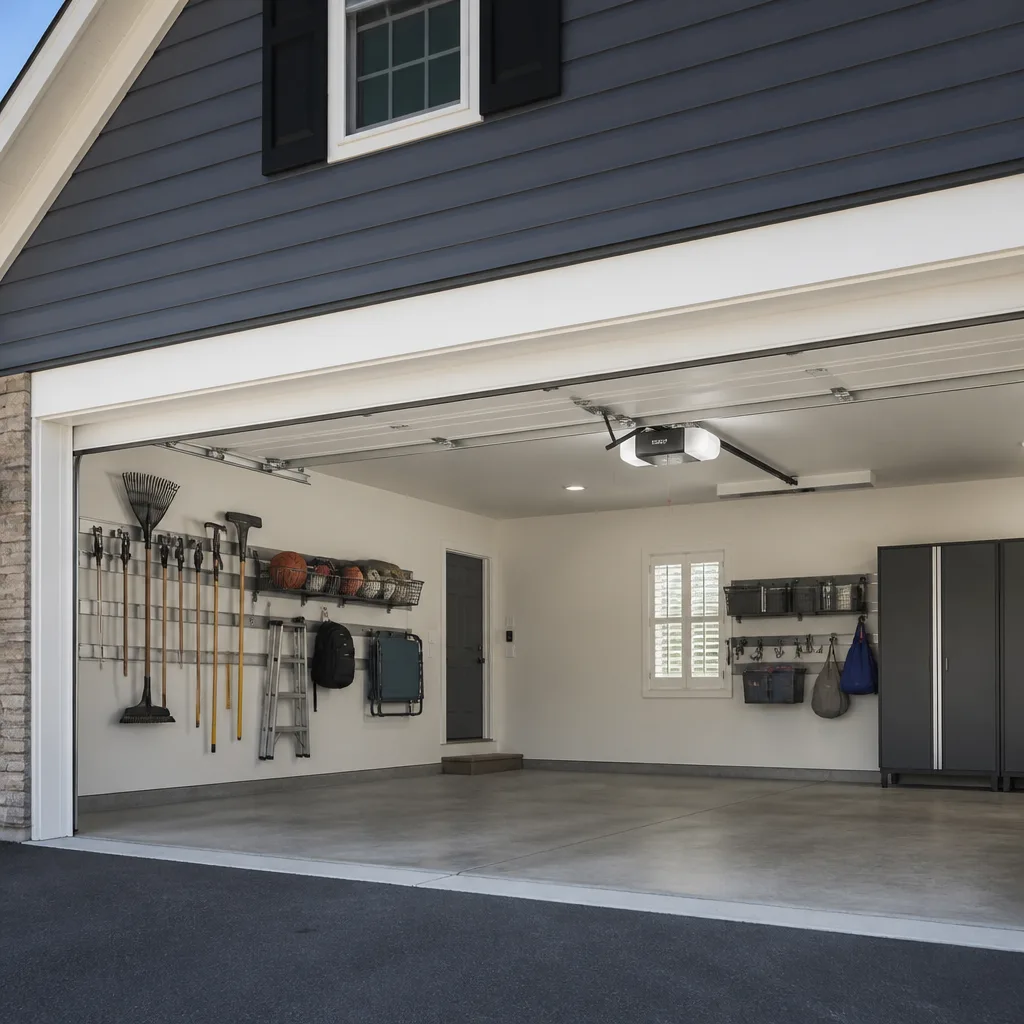
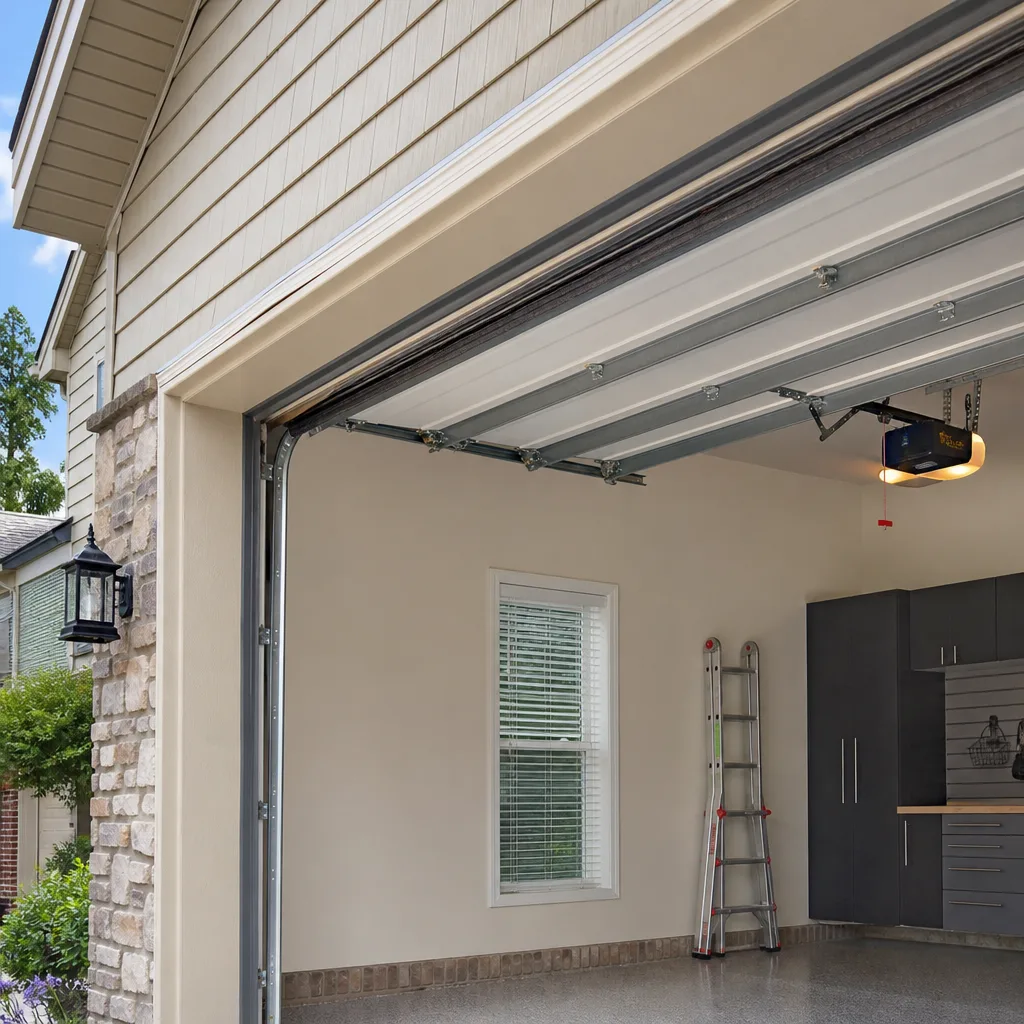
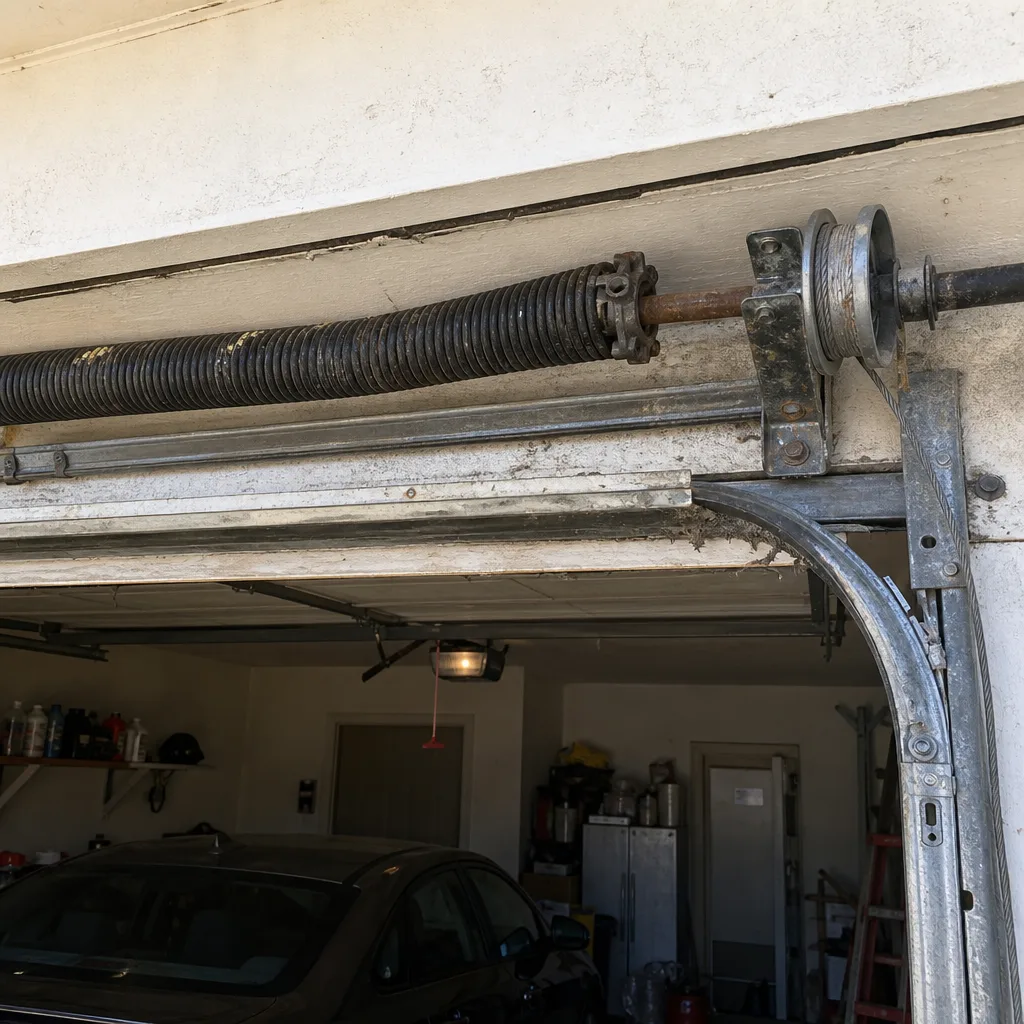 Before
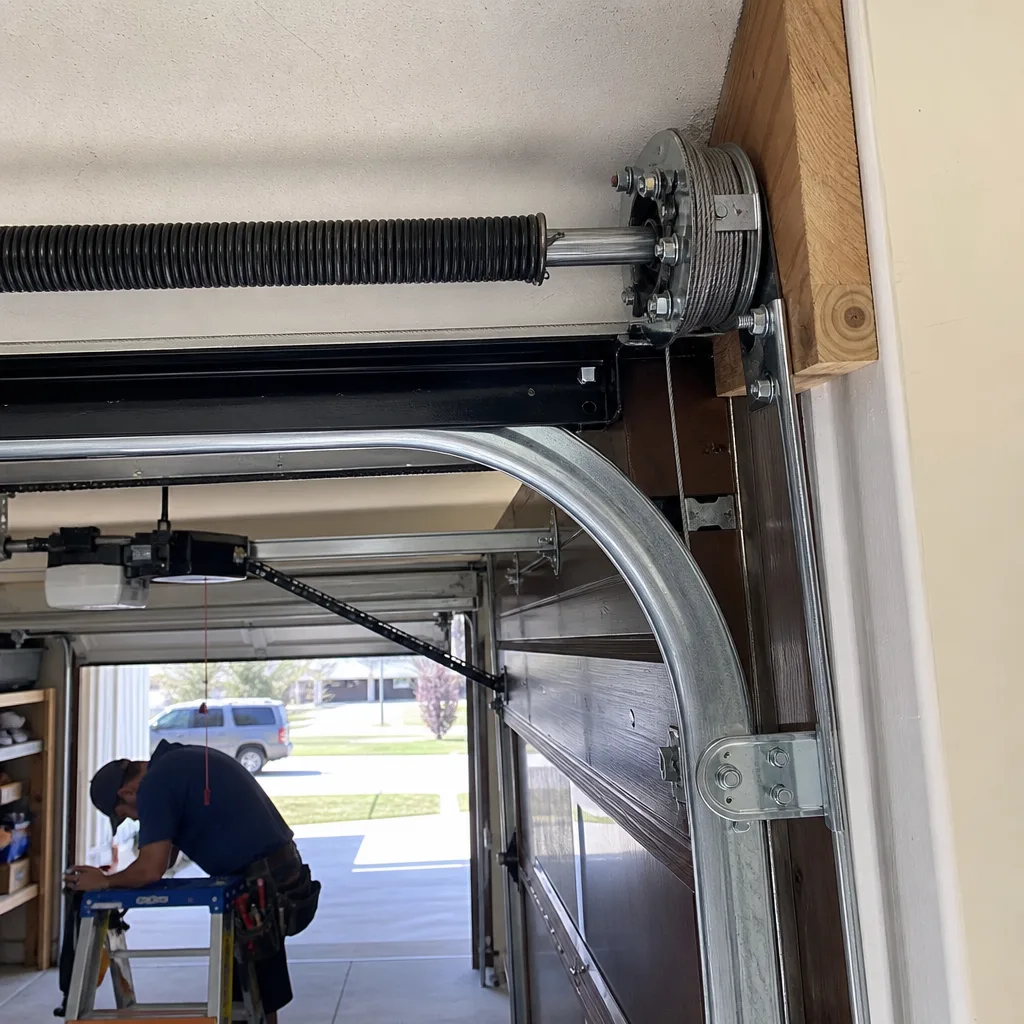 After
After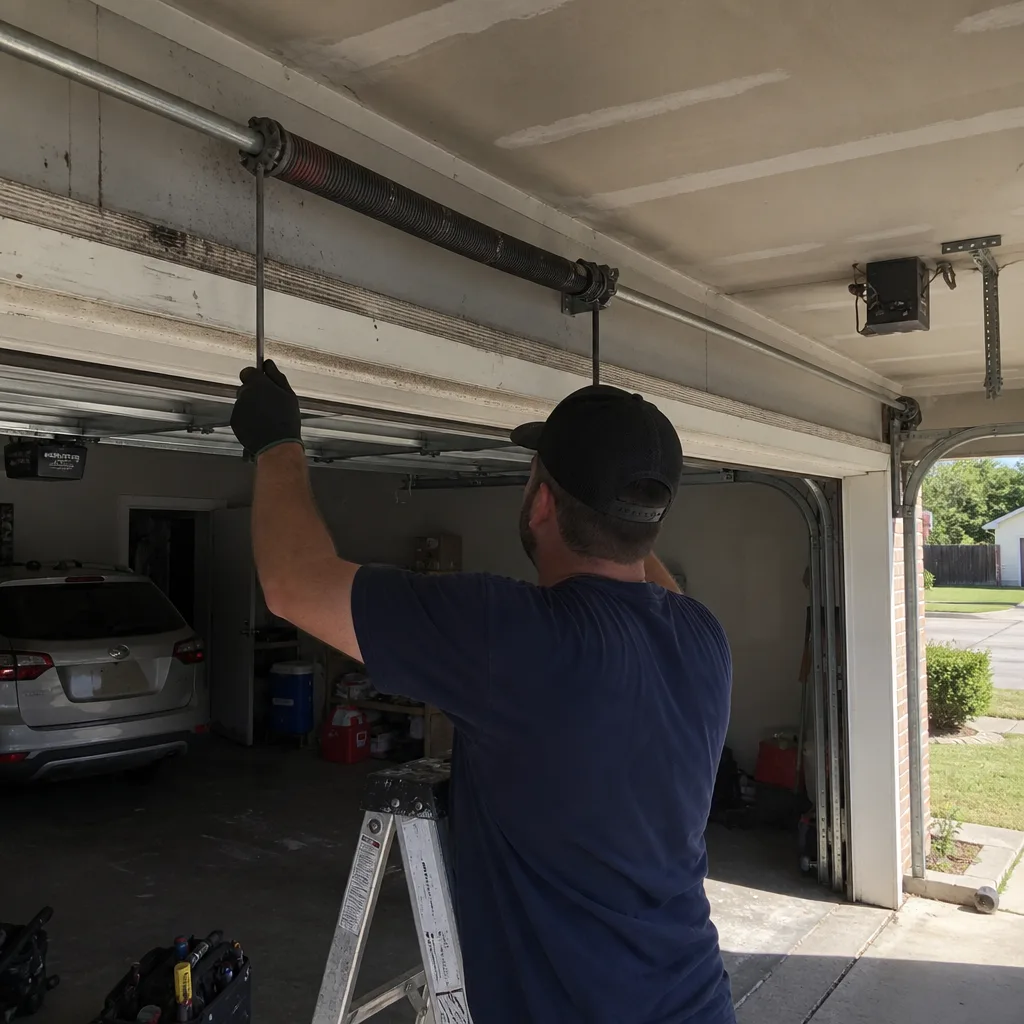 Before
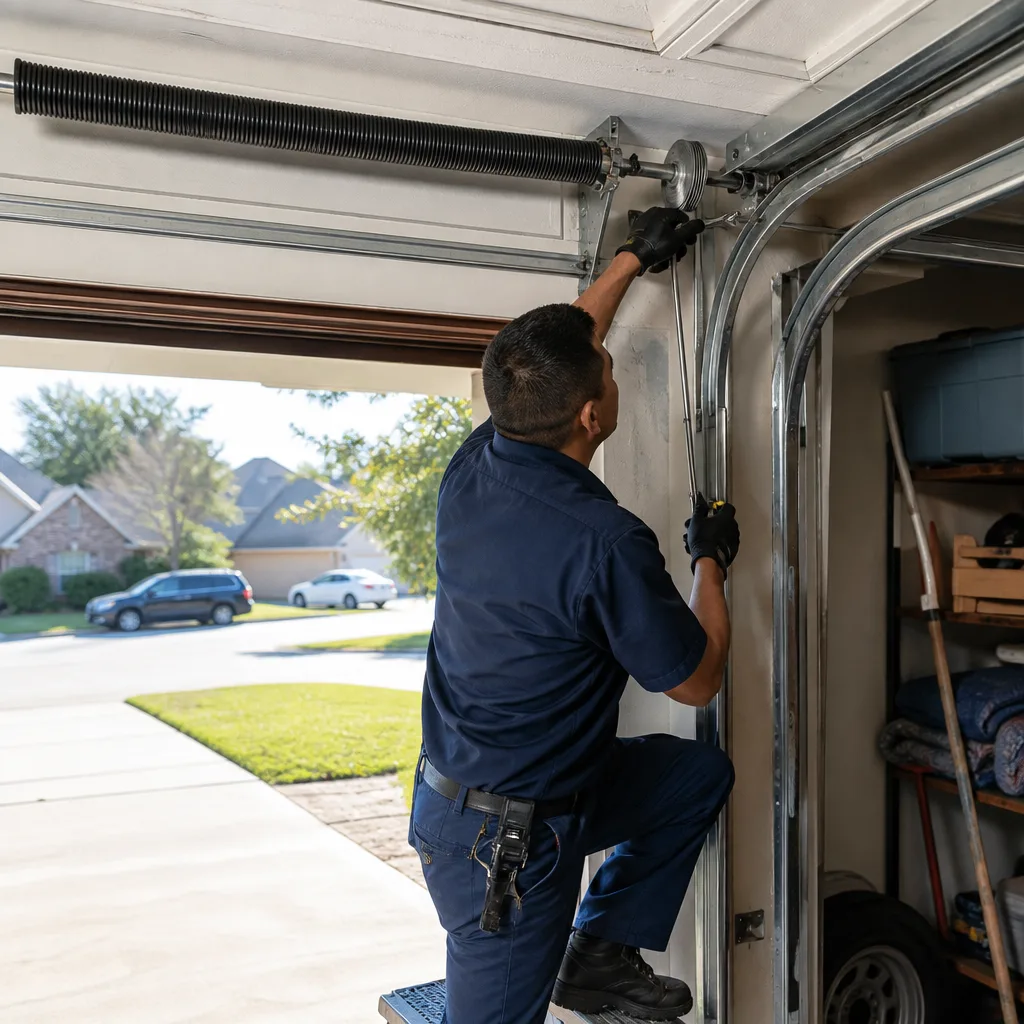 After
After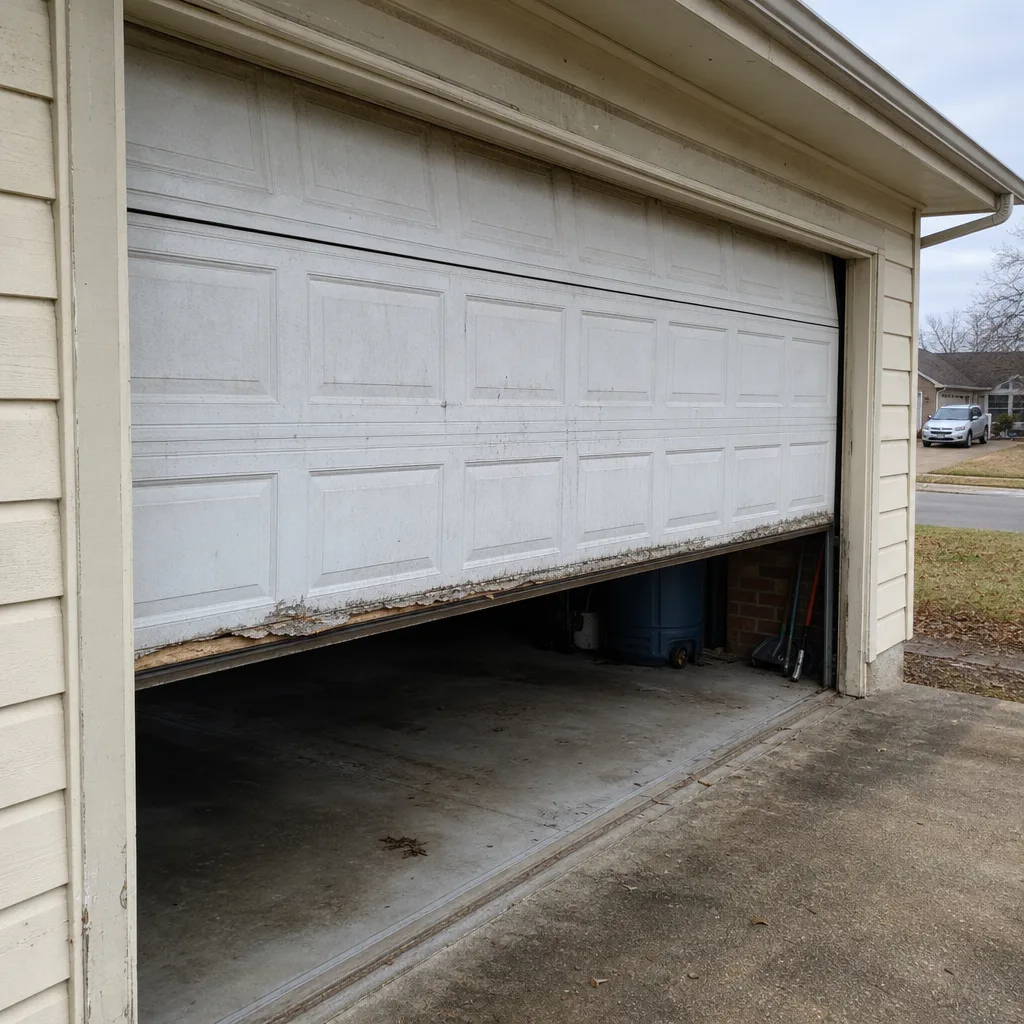 Before
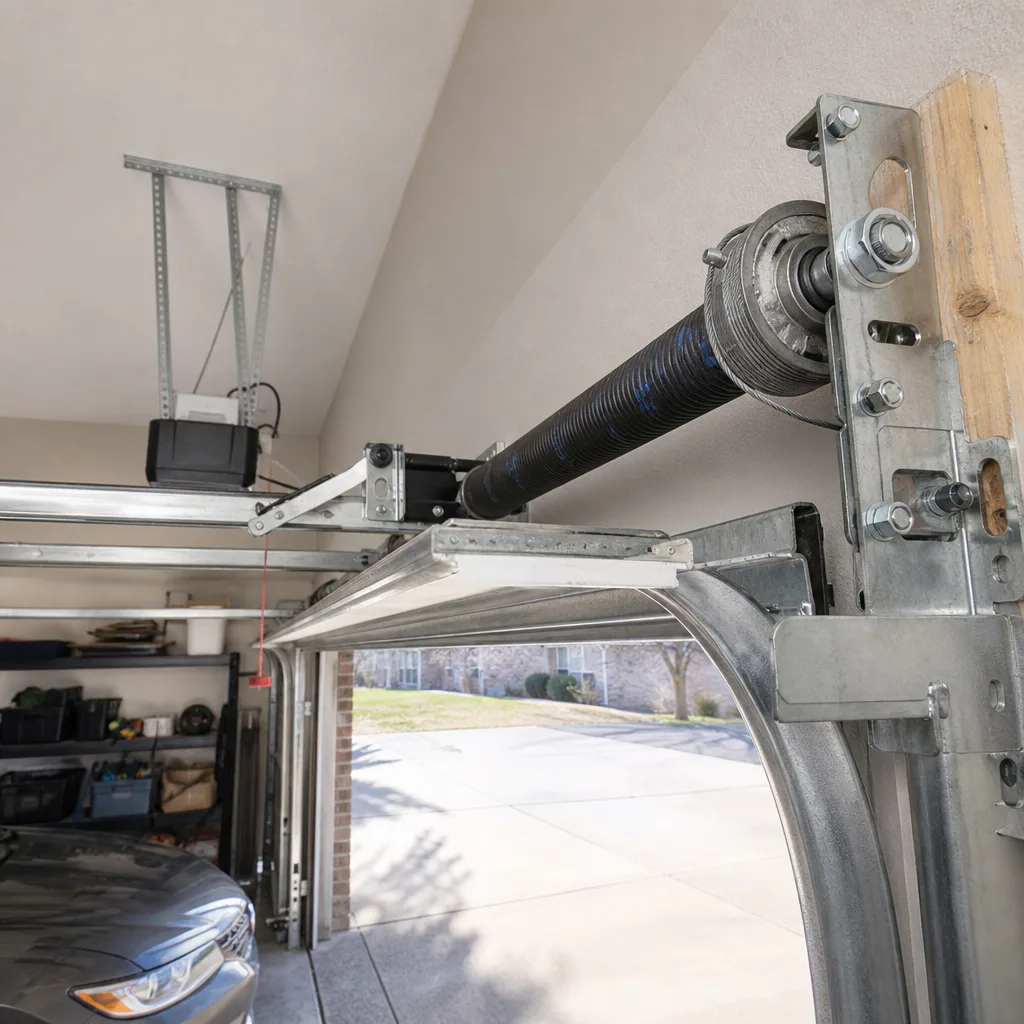 After
AfterSeasonal Garage Door Care for Benbrook: Year-Round Homeowner’s Guide
The national advice to winterize your garage door in October was written for Minneapolis. In Benbrook, the season that destroys garage doors is summer, not winter, and the single highest-value maintenance window opens in March, not September. After 42 years of working on doors from Benbrook’s older ranch neighborhoods near the lake to the newer builds off I-20, we’ve learned that North Texas clay soil, UV exposure, and rapid temperature swings create a maintenance calendar that looks nothing like the generic checklists circulating online. This guide gives you a month-by-month plan built specifically for Benbrook’s actual climate, with specific tasks, warning signs, and more guides & resources on the one inexpensive fix that can add years to your opener’s life.
Quick Answer
Benbrook homeowners should perform garage door maintenance four times yearly: spring tension adjustment in March-April before summer heat arrives, UV and heat protection checks in June-July, weather seal replacement and hardware inspection in October-November before freeze events, and track alignment verification in January-February after clay soil freeze-thaw cycles. For full details, see The Complete Guide to Garage Door in Benbrook. Most critical: adjusting spring tension before sustained 100°F garage temperatures arrive, as heat-expanded metal changes door balance and accelerates wear on motors and cables.
Table of Contents
- March-April: Spring Tension Adjustment Before the Heat
- June-August: Surviving Benbrook’s Brutal Garage Summers
- October-November: Weather Seal and Hardware Prep for Unpredictable Freezes
- December-February: Freeze-Thaw Cycles and Track Shift
- Your Month-by-Month Maintenance Calendar
- What You Can Safely Check vs. What Requires a Technician
- Common Mistakes to Avoid
- When to Call a Professional
- Frequently Asked Questions
March-April: Spring Tension Adjustment Before the Heat
This is the most important six-week window for your garage door. Skip everything else on this list if you must, but don’t skip this.
Here’s why March matters in Benbrook specifically. Our winters are brief, but they do drop below freezing. Torsion springs contract in cold weather. By late February, they’ve been running slightly tighter than spec for months. Then April arrives, daily highs climb through the 70s and 80s, and garage interiors start hitting 90°F. The springs expand. The door balance shifts. A door that closed smoothly in January now slams or drifts, and the opener motor works harder with every cycle.
In our experience, the doors we service in Benbrook’s older neighborhoods - the 1970s and 1980s ranches near Benbrook Lake, the homes off Mercedes Street and Winscott Road - show this pattern most clearly. Their original wood-frame construction traps more heat in attached garages, and their doors have more cycles on them. We regularly see spring fatigue failures in July and August that began as balance issues back in March.
What happens if you ignore this window: An out-of-balance door forces the opener to pull or push unevenly. The motor board overheats. The drive gear strips. The safety sensors misalign. What could have been a $189 spring adjustment becomes a $600 opener replacement.
Specific tasks for March-April:
- Test door balance manually. Disconnect the opener by pulling the red release cord. Lift the door halfway by hand. It should stay put, neither rising nor falling. If it drifts, the spring tension is off.
- Listen for new noises. Grinding, popping, or squealing that wasn’t there in January indicates metal fatigue or lubrication breakdown.
- Inspect cables for fraying. Look especially where cables wrap around the bottom bracket. A single broken strand means replacement time.
- Schedule professional spring tension adjustment. This is not a DIY task. Torsion springs store lethal energy. A slip with a winding bar causes serious injury or death.
Our $89 Seasonal Tune-Up includes spring balance verification, cable inspection, roller lubrication, and safety sensor alignment. We book these heavily in March and April for good reason.
June-August: Surviving Benbrook’s Brutal Garage Summers
Benbrook garage interiors reach 110°F to 120°F on the worst July afternoons. This isn’t uncomfortable. It’s destructive.
The most expensive component to fail in summer heat is the opener motor board, the circuit brain that controls speed, force, and safety reversal. Most motor boards are rated to 140°F ambient, but garage temperatures spike well above that near the ceiling where openers mount. Sustained heat causes solder joint fatigue, capacitor bulging, and eventual board failure. We’ve replaced motor boards on 3-year-old openers that should have lasted 15.
Here’s the inexpensive fix: ventilation. A simple louvered vent installed in the garage’s gable end, combined with keeping the garage door cracked 6 inches when home and weather permits, can drop peak temperatures 15-20°F. For attached garages with bedrooms above, this also reduces cooling load. In Benbrook’s newer subdivisions like those off Walsh Ranch Parkway, where homes feature large garage volumes and direct western exposure, this matters even more.
Summer-specific inspection tasks:
- Check opener thermal shutdown behavior. If your opener stops mid-cycle on hot afternoons and restarts 10 minutes later, the motor is overheating. This is a warning, not a quirk.
- Inspect weather seal for UV cracking. The rubber or vinyl seal along the door bottom hardens and cracks under sustained UV. Cracked seal lets hot air in and cooled air out. It also admits insects and, during our brief hard freezes, lets cold air channel directly under the door.
- Test auto-reverse with a 2×4. Heat-expanded metal can change force calibration. Place a 2×4 flat on the floor where the door closes. It should reverse on contact. If it doesn’t, force settings need adjustment.
- Lubricate rollers and hinges with silicone-based product. Standard grease liquefies and runs in heat. Silicone stays put. We use and recommend white lithium or silicone formulations, never WD-40 for this application.
For homeowners with Chamberlain or Genie chain-drive openers, summer is also when chain tension loosens. Heat expansion of the rail, combined with natural chain stretch, causes sagging and slapping. A quick tension adjustment prevents premature sprocket wear.
October-November: Weather Seal and Hardware Prep for Unpredictable Freezes
North Texas doesn’t have a gradual autumn. We have extended summer, then a cold front that drops temperatures 40 degrees overnight. Benbrook’s first hard freeze typically arrives between November 15 and December 5, but we’ve seen it in October. The door that was fine at 80°F on Monday can gap and whistle at 28°F on Thursday.
The critical task this season is bottom weather seal replacement. Not inspection. Replacement. By fall, any seal that saw the previous summer’s UV is compromised. It may look intact at warm temperatures, but cold hardens the rubber and opens micro-cracks. When the first freeze hits, that seal becomes rigid and loses contact with the floor, creating a gap that admits freezing air and, in our clay-soil region, moisture that freezes and heaves.
Benbrook-specific freeze preparation:
- Replace the bottom seal entirely. Use a thermoplastic elastomer (TPE) seal rated to -40°F, not basic vinyl. TPE stays flexible in cold. For Clopay and Amarr doors, match the seal profile to the retainer channel - U-shaped, T-shaped, or bulb-style.
- Inspect and adjust threshold seal. The rubber strip on the concrete, separate from the door seal, cracks from UV and tire contact. A compromised threshold lets water pool and freeze, creating an ice dam that prevents door closure.
- Check side and top weatherstripping. The vinyl or brush seals along the door frame compress over time. In Benbrook’s windy exposed areas near the lake, these take more abuse than inland neighborhoods.
- Lubricate all moving parts with low-temperature grease. Summer lubricant becomes thick and gummy in cold, increasing opener strain.
- Test battery backup. If your opener has battery backup, cold reduces capacity. Test it. Replace if runtime is under 24 hours.
One detail homeowners miss: the gap between door sections. As temperatures drop, metal contracts and these gaps widen slightly. A door that sealed well in summer may leak air in winter. Inspect the section joints for daylight when the door is closed against bright exterior light.
December-February: Freeze-Thaw Cycles and Track Shift
Benbrook’s winter is brief but chemically active. Our clay-rich soil, common throughout Tarrant County’s Blackland Prairie region, expands when wet and freezes, then contracts and cracks when it thaws. This movement transfers to concrete slabs, including garage floors. A garage door track that was plumb in November can shift 1/4 inch by February.
The sign is subtle but specific: the door binds or rubs at one side near the bottom, but only when closing. Opening is smooth. This happens because the track has shifted inward at the base, pinching the roller as the door’s bottom section enters the vertical track. Left uncorrected, the roller wears flat on one side, the track wallows out, and the door jumps the track entirely.
What to check in Benbrook’s winter months:
- Visual track plumb check. Stand inside the garage, door closed. Sight down each vertical track. It should appear perfectly vertical. A lean inward or outward at the bottom indicates slab movement.
- Roller binding test. Close the door slowly, watching where each roller enters the vertical track. Any hesitation, noise, or visible rubbing is a problem.
- Hardware torque verification. Cold contracts metal, loosening bolts. Check track mounting brackets, especially the lowest ones nearest the floor. Do not over-tighten; snug is correct.
- Opener force sensitivity. Cold-stiffened lubricant and slightly shifted tracks increase resistance. If your opener’s force setting is calibrated for summer conditions, it may trigger safety reverse on cold mornings. This is annoying but correct - the door is telling you something is wrong, not that the opener is broken.
In the Benbrook neighborhoods near the Trinity River bottom, where soil moisture stays higher, we’ve seen more pronounced winter track shift than in the hillier areas toward Crowley. If you’ve noticed this pattern two winters running, consider having the slab evaluated for drainage. It’s not a garage door problem, but it causes garage door problems.
Your Month-by-Month Maintenance Calendar
Print this. Tape it inside the door to the house.
| Month | Task | Time Required | DIY or Pro? |
|---|---|---|---|
| January | Check track plumb; inspect for winter binding; verify hardware torque | 20 minutes | DIY visual, pro if binding found |
| February | Lubricate rollers, hinges, bearings with low-temp grease; test battery backup | 30 minutes | DIY |
| March | Schedule spring tension adjustment; test manual balance; inspect cables | 45 minutes DIY, 1 hour pro | Pro for spring work; DIY for inspection |
| April | Final pre-heat check: verify auto-reverse, sensor alignment, opener force settings | 20 minutes | DIY |
| May | Inspect weather seal for UV hardening; clean photo eyes | 15 minutes | DIY |
| June | Install or verify garage ventilation; check opener for thermal shutdown | 30 minutes | DIY |
| July | Deep lubrication of all moving parts with high-temp silicone product | 30 minutes | DIY |
| August | Inspect chain/belt tension; check wall button and remote function | 20 minutes | DIY |
| September | Order replacement weather seal; inspect threshold condition | 15 minutes | DIY |
| October | Replace bottom seal; inspect side/top weatherstripping; lubricate for cold | 45 minutes | DIY for seal; pro if retainer damaged |
| November | Final freeze prep: test auto-reverse with 2×4; verify emergency release | 20 minutes | DIY |
| December | Post-first-freeze check: look for binding, gaps, or new noises | 15 minutes | DIY visual, pro if issues found |
The two tasks in bold are the highest-leverage actions. Everything else extends component life. Those two prevent catastrophic failure.
What You Can Safely Check vs. What Requires a Technician
We’re plain about this because we’ve seen the aftermath of confident homeowners who guessed wrong.
Safe for any homeowner:
- Visual inspection of cables, springs, rollers, and tracks from a safe distance
- Manual balance test (disconnect opener, lift door halfway)
- Auto-reverse test with 2×4 or similar object
- Photo eye cleaning and alignment verification
- Weather seal replacement (if retainer channel is intact)
- Lubrication of hinges, rollers, and bearings
- Remote battery replacement and reprogramming
Requires a trained technician:
- Spring tension adjustment or replacement (torsion or extension)
- Cable replacement or drum adjustment
- Track realignment after shift or impact
- Opener motor board replacement or force calibration
- Bottom bracket replacement (cables under tension)
- Any repair involving the door in a partially open position
The safety caveat is real, not cautious language. Garage door torsion springs store enough energy to cause death or amputation. Every year in Tarrant County, emergency rooms treat homeowners who attempted spring work. The flat price for professional adjustment is a fraction of an ER visit, and our technicians carry the correct winding bars, gauges, and safety equipment.
Common Mistakes to Avoid
- Using WD-40 as garage door lubricant. WD-40 is a solvent and water displacer, not a lubricant. It strips existing grease, attracts dust, and accelerates wear. Use white lithium grease or silicone spray formulated for door hardware.
- Ignoring a door that “just started” making noise. In Benbrook’s heat, a new grinding sound means metal-on-metal contact that will destroy a gear or bearing within weeks. The $0 fix today is the $400 replacement next month.
- Winterizing in October like you’re in Ohio. Our freeze risk is real but brief. Over-sealing a garage in fall traps summer heat and moisture, promoting rust and opener thermal stress. Seal against air infiltration, not against a Minnesota winter.
- Replacing only one spring on a two-spring door. Springs age as a matched set. A new spring paired with a fatigued old spring creates dangerous imbalance and shortens the new spring’s life. We replace both, every time, with the cost stated upfront.
- Assuming a smart opener eliminates maintenance. Chamberlain and Genie MyQ systems alert to some issues, but they don’t measure spring tension, track plumb, or seal condition. The technology helps; it doesn’t replace looking with your own eyes.
- Waiting for total failure. A door that won’t open on a 5°F morning or a 105°F afternoon is an emergency call, not a scheduled service. Emergency rates apply, and parts availability is never guaranteed same-day. Preventive maintenance costs less and happens on your schedule.
When to Call a Professional
Call when you see frayed cables, broken springs, track misalignment, or a door that won’t stay balanced manually. Call if the opener reverses unpredictably, makes new noises, or shows thermal shutdown. Call before the emergency, not during it.
Carl Dutton and the team at Mainspring Garage Door Co. have worked on Benbrook doors since 2016. We answer the phone with a live person, 24/7, including nights and holidays. Our trucks carry springs, cables, openers, and hardware for all major brands, so most jobs finish in a single visit. Every repair includes our 90-Day Done Right Promise in writing: if it’s not right, we come back at no charge, no paperwork, no argument.
Garage Door Repair in Benbrook is our core service, and we also handle Garage Door Installation in Benbrook and Garage Door Opener in Benbrook when replacement makes more sense than repair. Free estimates, upfront pricing, and the $89 Seasonal Tune-Up are always available. Call (817) 662-2212.
Frequently Asked Questions
Professional seasonal tune-ups in Benbrook typically run $89 to $150, depending on door size and components. Mainspring’s $89 Seasonal Tune-Up includes spring balance verification, cable inspection, roller lubrication, safety sensor alignment, and hardware torque check. Repairs found during inspection are quoted before any work begins. Call (817) 662-2212 to schedule - estimates are free.
Homeowners can safely perform visual inspections, lubrication, weather seal replacement, balance tests, and safety reversal checks. Spring tension adjustment, cable replacement, track realignment, and any work with the door under tension require a trained technician due to serious injury risk. When in doubt, call for a free second opinion.
Lubricate moving parts twice yearly: in March with a high-temperature silicone product before summer heat, and in October with low-temperature grease before cold arrives. Benbrook’s wide temperature swing - from 20°F to 105°F annually - means lubricant formulation matters as much as frequency. Never use WD-40.
Thermal shutdown. The motor board overheats when garage temperatures exceed its rating, typically 140°F ambient. In Benbrook, attached garages with western exposure easily reach 120°F internally, and ceiling-mounted openers sit in the hottest air layer. Improve ventilation, ensure opener mounting allows air circulation, and consider a thermal shield if the problem persists. Persistent thermal shutdown indicates the motor is failing and needs professional evaluation.
Three common causes in Benbrook: thickened lubricant from summer formulation, contracted metal reducing clearances, and clay soil freeze-thaw shifting the slab and tracks. If the binding occurs only when closing and only near the bottom, suspect track shift from soil movement. This requires professional track realignment.
Yes. We maintain a permanent 5% discount for seniors and veterans on all services, including the $89 Seasonal Tune-Up. We also offer $50 off any repair over $250 and free second opinions on any written estimate from another company. These are standing offers, not limited-time promotions.
The Bottom Line
Benbrook’s garage doors face a unique stress pattern: summer heat that destroys electronics, clay soil that moves concrete, and freeze events that arrive without warning. The maintenance calendar that works here starts in March, not October, and centers on spring balance before heat arrives and seal replacement before cold hits. Do those two things professionally, handle the monthly checks yourself, and your door will outlast the national average by years. Ignore the calendar, and you’ll likely meet us on an emergency call, which is a square deal for us but a harder day for you.
Written by Carl Dutton, Owner at Mainspring Garage Door Co., serving Benbrook since 2016.